
Heat, Not Hackers: What the CME Outage Reveals About the Future of Data Centers
Most large-scale system outages today are quickly attributed to cyberattacks.
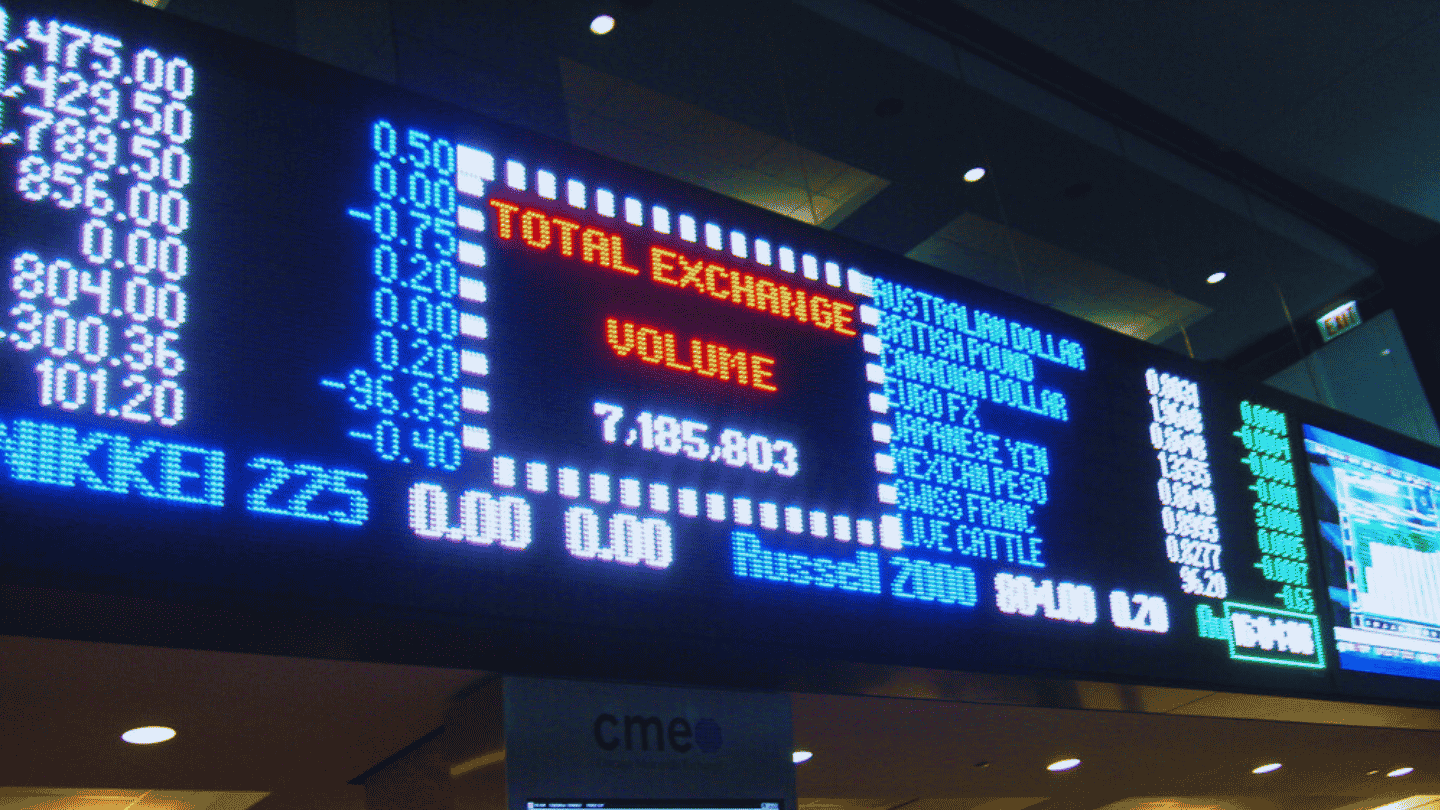
The recent outage at the Chicago Mercantile Exchange (CME) was different.
On Friday, November 28, 2025, trading on one of the world’s most critical financial markets was halted for nearly ten hours. Not because of malicious code. Not because of software failure. But because temperature crossed a line.
I want to pause on that detail, because it matters far more than it may seem.
This was not a minor disruption. CME is global, continuous, and deeply interconnected with financial systems worldwide. When trading stopped, it sent a clear signal to anyone paying attention: thermal management is becoming a first-order risk for mission-critical infrastructure.
Not a One-Off Event, but a Pattern
From my standpoint, the immediate cause was straightforward. A failure in part of the cooling system—specifically chillers supporting the data hall—led to a rapid temperature increase. As temperatures rose, protective mechanisms inside the computing infrastructure triggered a shutdown to prevent permanent hardware damage.
Those safeguards worked as designed. But they didn’t prevent disruption.
What makes this event significant is not just what failed, but why it failed. Modern data centers are operating with increasingly narrow thermal margins. Each new generation of computing hardware packs more power into smaller spaces, producing unprecedented heat density. Systems are running closer to their limits, with less room for error.
Events like this are rarely public. Thermal incidents often remain opaque, quietly resolved behind the scenes. In this case, the root cause was explicitly attributed to thermal management—and that transparency offers a rare window into a growing industry challenge.
Why Liquid Cooling Alone Won’t Solve the Problem
The industry is already responding. The shift from air cooling to liquid cooling is well underway, particularly for AI and high-performance computing workloads. Liquid cooling is more efficient than air at removing heat, and its adoption is both logical and necessary.
But it is not sufficient.
Most liquid cooling strategies today still rely on a familiar assumption: if you lower the temperature of the fluid enough and increase flow, the problem goes away. In practice, this often means pushing more load onto upstream infrastructure—chillers, heat exchangers, and facility-level systems responsible for rejecting heat to the outside environment.
The bottleneck doesn’t disappear. It simply moves.
I want to be very clear here: liquid cooling improves heat removal. It does not automatically provide temperature control.
Heat Removal vs. Temperature Control
At the heart of the issue is a subtle but critical distinction: heat removal is not the same as temperature control.
From a thermodynamics perspective, the two are related. Remove more heat and average temperatures go down. But modern chip architectures expose the limits of this logic.
Next-generation chiplets are extraordinarily complex. They consume enormous power (often kilowatts) within packages smaller than a smartphone. More importantly, they are non-uniform. Different regions of the same chip have different thermal sensitivities, and those needs change dynamically as workloads shift.
A uniform cooling approach, no matter how aggressive, cannot address this complexity.
The real challenge is not extracting heat from the system as a whole, but controlling temperature locally, precisely, and in real time—deciding how much cooling is needed, where, and when.
Without that level of control, systems face two outcomes: protective throttling and shutdowns in the best case, or permanent hardware damage in the worst.
The Iceberg—and the Silo Problem
I often describe the situation using an iceberg metaphor. Everyone in the industry can see it. No one knows exactly how big it is. And many assume it will be dealt with later, or by someone else.
That mindset is reinforced by how the industry is structured.
Chip designers, server OEMs, system integrators, and data center operators each optimize within their own domain. Cooling is often treated as a downstream concern—something to be accommodated after compute decisions are made.
But thermal behavior doesn’t respect organizational boundaries. It spans silicon, packaging, servers, facilities, and operations.
When responsibility is fragmented, risk accumulates.
This is not a component problem. It is a systems problem.
What Future-Proofing Really Means
In this context, future-proofing does not mean colder fluid, larger chillers, or repeated facility retrofits.
It means designing architectures that can adapt across multiple generations of hardware without forcing massive reinvestment every time chip power increases.
That requires a shift from passive to active systems—solutions capable of fine-grained, chip-level temperature control, integrated with the broader infrastructure rather than bolted on afterward.
Future-proof systems are defined not by how much heat they can remove, but by how intelligently they manage temperature as complexity increases.
Watch the Full Conversation
I recently recorded a video to walk through what happened at CME, why similar events are likely to become more common, and why the industry needs to rethink thermal management as an integrated, cross-disciplinary challenge.
Watch the full interview here: https://www.youtube.com/watch?v=eKpU_TKGWKs
Whether you design chips, build servers, integrate systems, or operate data centers, the message is the same: thermal management is no longer a secondary concern. It is becoming a defining constraint of modern computing infrastructure.
Maurizio Miozza

